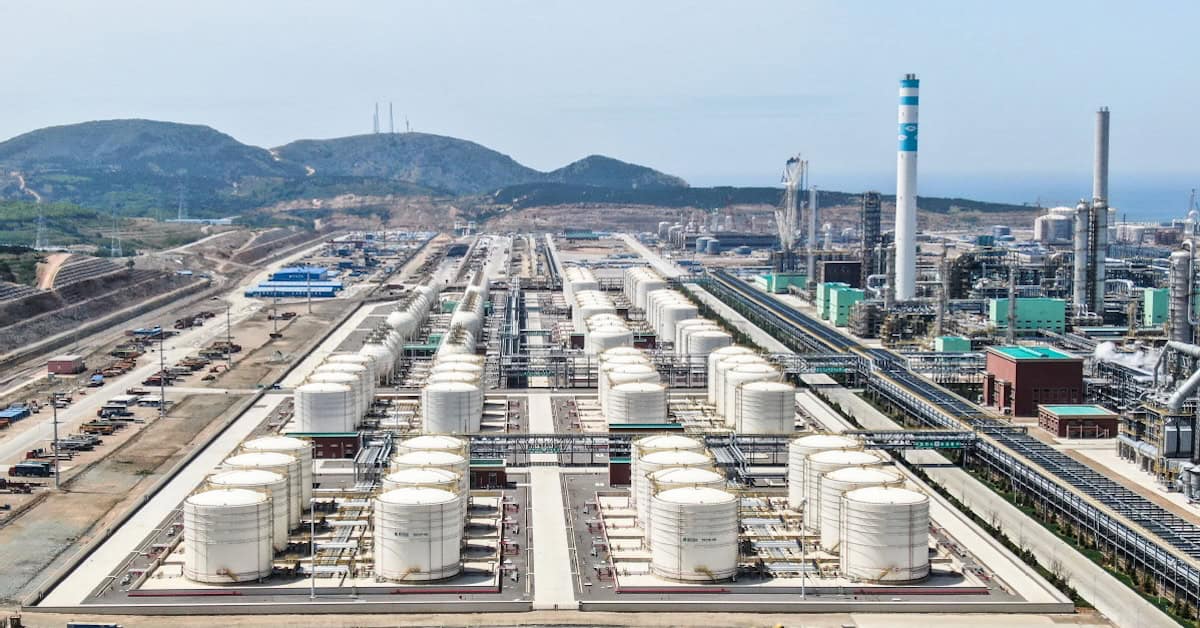
California’s growing dependance on refineries in China to meet the humongous demands for transportation fuels to support the demands of the States ‘public and military airports, and the trucking of the products received at three of the busiest terminals in America to the rest of the country, is becoming a national security risk to the entire United States of America.
This Energy Newsbeat Podcast – Conversations in Energy – Stuart Turley delves into California’s escalating energy crisis, examining the impact of Governor Newsom’s policies on both the state’s economy and national security. Experts Ronald Stein and Mike Umbro outline the dangers posed by California’s growing reliance on imported fuel, the closure of in-state refineries, and the increasing dependence on China for energy.
The America Out Loud NEWS article, How its policies are hurting California and are now a US national security risk, was a catalyst for the 45-minute Podcast.
California’s Energy Policies are a Problem: A Major National Risk?
California’s energy island will be unable to meet the in-state demands for transportation fuels. The West Coast gasoline, diesel, and aviation fuels market is isolated from other supply and demand centers as California is an energy island isolated from the rest of the United States, East of the Sierra Mountains. The Sierra Mountains are a natural barrier that prevents the state from pipeline access to any of the excess oil from fracking.
California transportation fuel demands for airports, ships, trucks, and cars have staggering numbers from the in-state refineries:
- Jet fuel: With 145 airports, including 9 international airports and 41 military airports, the demand for aviation fuel is 13 million gallons daily, making it the largest consumer of jet fuel in America.
- Diesel: Diesel fuel is the second-largest transportation fuel used in California, consuming approximately 10 million gallons per day to support the state’s trucking of products from three of the busiest shipping ports in America.
- Gasoline: For its 30 million vehicles, California is the second-largest consumer of motor gasoline among the 50 states, consuming approximately 42 million gallons of gasoline per day, just behind Texas.
In October 2024, Phillips 66 announced that it would close its Wilmington-area refining complex in 2025. The Valero Benicia Refinery in Northern California is scheduled to close by the end of 2026. Losing 17% of the States’ manufactured fuels to meet all the above transportation demands makes the West Coast susceptible to importing those transportation fuels from foreign countries.
In the immediate term, China has plans for multiple new refineries, with at least five projects expected to be completed by 2028 and another three by 2030, contributing to a broader shift toward integrated petrochemical facilities. Thus, China is savoring the future with their many refineries coming online to meet the DEMANDS of California.
Image: Xinhua